


By Sam Gobrail, EVP, Solutions and Delivery, and Lucy Park, Co-founder & CPO, Upstage AI
Part 2 of a four-part series on what separates a vibe-coded document AI demo from a system an enterprise can run in production.
A health claim record goes into a document AI system on Monday. The system returns a decision, approved, with a clear, well-written summary of why. On Thursday, the same record goes in again. This time the system returns denied, with an equally clear, equally well-written summary of why.
Both explanations read perfectly. Only one can be right, and there is no way to tell which.
In a regulated enterprise, this is a serious problem. It points to the deeper issue that decides whether document AI can be deployed in high-stakes work at all: auditability.
Across insurance, healthcare, banking, and any field where decisions must withstand scrutiny, getting the answer right is only half of what the system has to do. The other half is being able to explain how it got there, and prove it later.
A confident AI explanation can still be invented
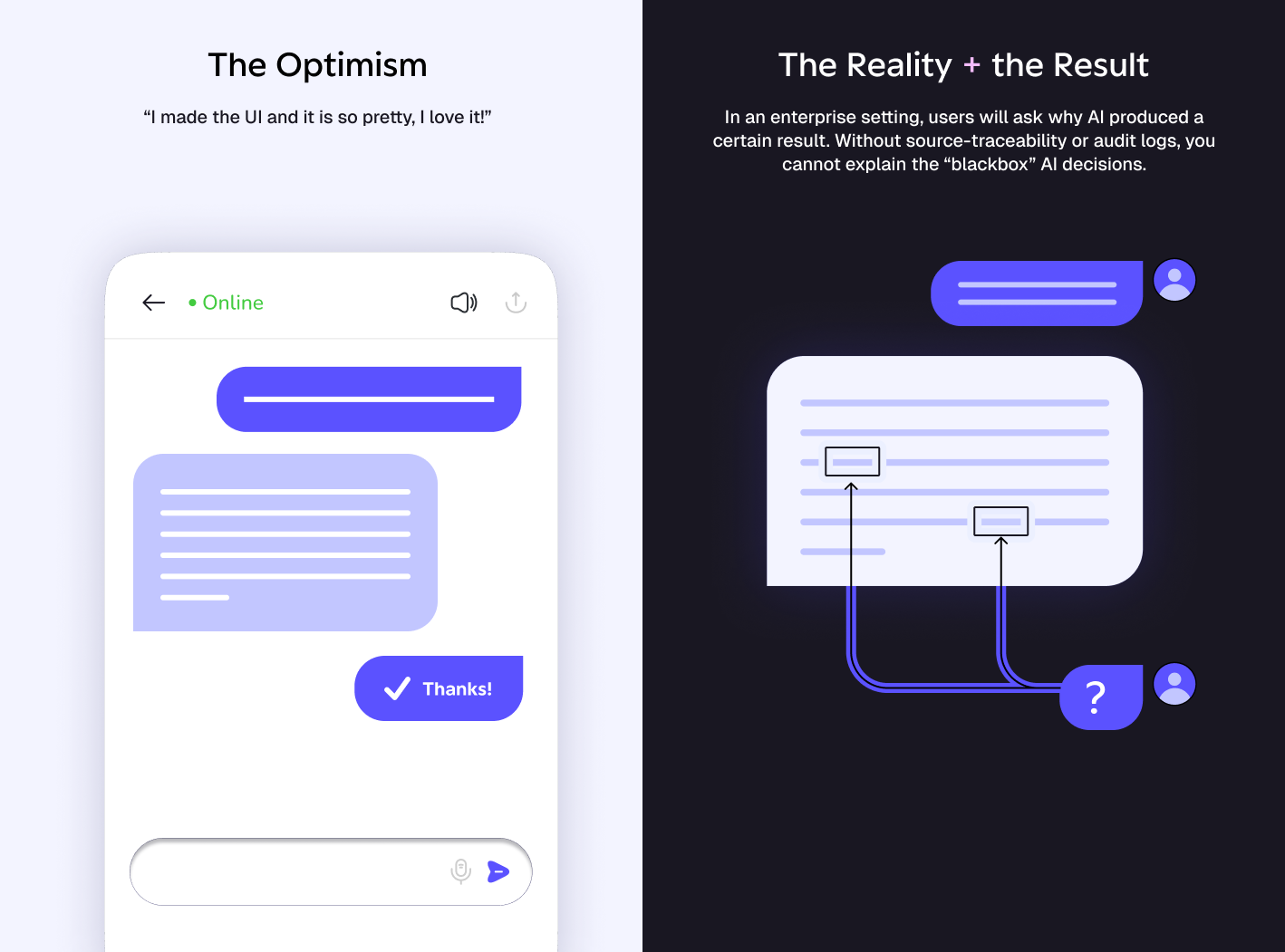
A frontier model can produce a fluent rationale for almost any output because the rationale is generated text, subject to the same variation and invention as the answer it explains. Two runs can yield two different answers and two convincing explanations. The explanation describes what the model produced, with no guarantee that it reflects how the value was actually derived or where it came from.
A source-grounded explanation connects the output back to the specific document, page, field, or evidence used to produce it.
In regulated work, an explanation that cannot be verified against the source document carries no evidentiary weight. It reads well and proves nothing. The Monday and Thursday problem is what this looks like in practice: a system that is articulate, inconsistent, and impossible to hold to account.
Auditability begins with explainability
Auditability is the ability to reconstruct, after the fact, how a result was produced, and to defend it to someone who was not there. That is impossible without explainability in the literal sense: every decision must be traceable, step by step, back to the source it came from.
A system that cannot show how a value was derived cannot be audited, however accurate it is on average. The two properties are directly linked. Explainability is the mechanism, and auditability is the outcome a regulated enterprise actually needs.
Why a raw model pipeline cannot be audited
A raw frontier model pipeline is a black box AI system: a document goes in and structured data comes out, with nothing in between that a person can inspect. When a value is wrong, there is no way to tell whether the parsing misread the page, the extraction picked the wrong field, or the classification sent the document down the wrong path.
There is no link from the output back to the place in the document it came from, and no record of who reviewed it, what they changed, or when it was approved. Knowing which step to trust, and by how much, is its own problem, which we cover in the piece on confidence.
When legal, compliance, or a regulator later asks how a particular figure entered the system of record, the honest answer is that no one can say. That gap is the deep, unglamorous part of the problem an internal build almost always underestimates.
Extraction is the visible work. The system that makes extraction auditable is the rabbit hole underneath it, and in regulated environments, it is the reason promising builds never reach production.
Regulation is catching up
Explainability and auditability are not just good ideas anymore. They are becoming legal and regulatory expectations.
In the last couple of years, two major regulatory frameworks have redrawn the lines for how insurers can use AI:
- The NAIC Model Bulletin on AI Use (2024) makes it clear: insurers must maintain accountability, transparency, and explainability for any AI system influencing decisions. That means documenting data sources, reviewing for bias, and proving that no algorithm is introducing unfair outcomes.
- The EU AI Act (2024) goes even further, identifying insurance underwriting and risk assessment as “high-risk” AI applications. Underwriters must maintain human oversight, auditable decision logs, and a transparent record of how every model behaves.
In simple terms, every automated action in underwriting, from data extraction to pricing recommendations, must now be explainable and defensible.
Regulators are saying what underwriters have known all along. When you can’t explain your decision, you lose credibility.
How Studio Makes Document AI Auditable
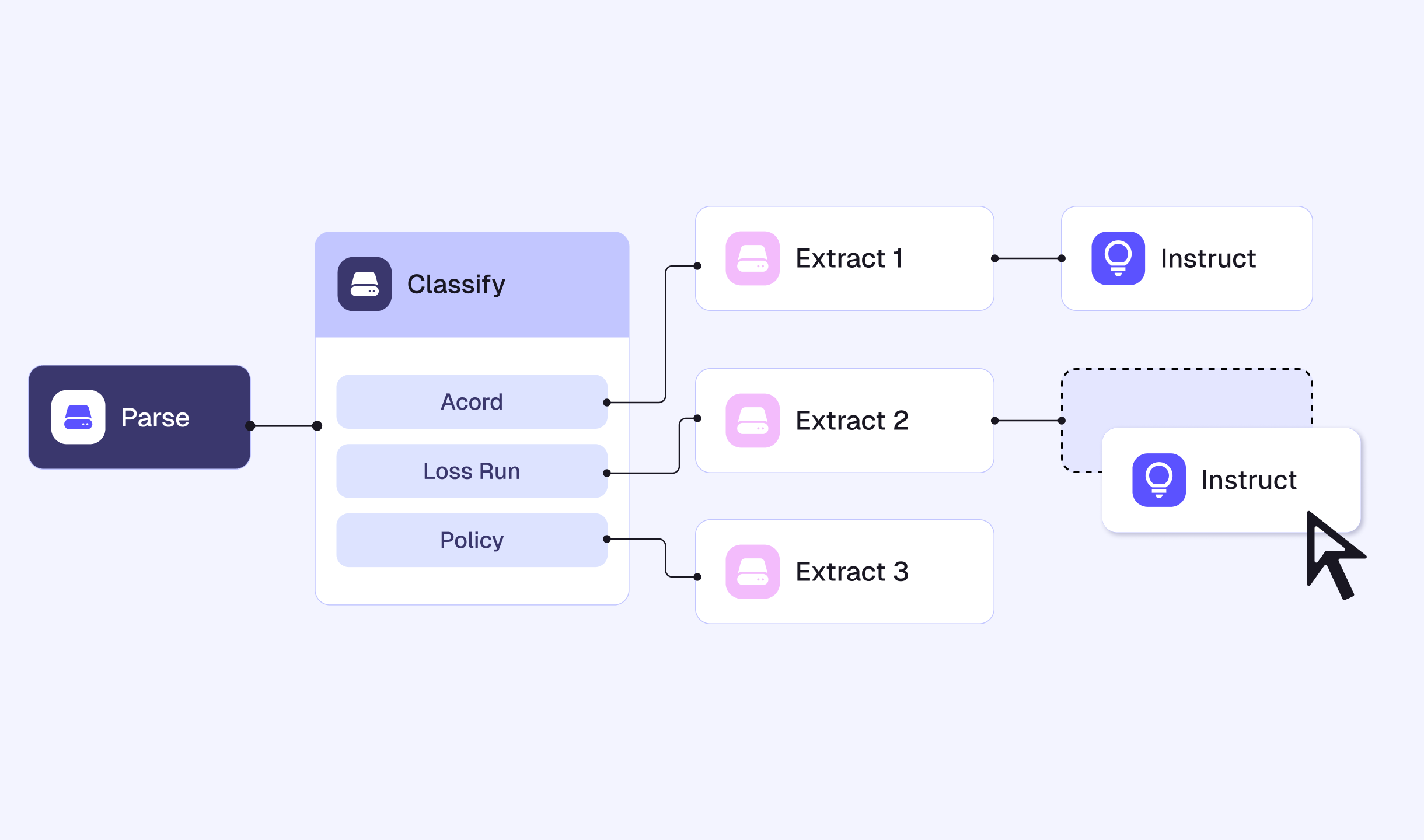
Upstage Studio is built around an explainable pipeline, where a document moves through distinct, visible stages: parse, extract, classify, and decision. Each stage produces a result that can be inspected on its own.
Every extracted value is grounded to its exact location in the source document, so a reviewer or an auditor can see the specific place on the page each value came from, alongside the conclusion the system drew from it. Every human action is part of the record: who reviewed an extraction, what they changed, and when it was approved. The full path, from the source document through parsing, extraction, human correction, and final approval, can be reconstructed and exported as an audit trail.
Because the pipeline is structured and recorded, the same document produces the same traceable result, and any change to it is visible. The Monday and Thursday problem stops being possible.
This is the system that sits underneath the extraction, and it is what a VP of underwriting or a head of claims is really asking about when they ask whether a tool is defensible. They may not run the technical evaluation themselves, but they know it has to satisfy the people who will: IT, legal, and auditors. An explainable, recorded pipeline is what lets those teams sign off.
In practice: The Tricura case study shows how the team automated application document extraction across inconsistent formats while holding accuracy above 95%, with classification and parsing handled regardless of how each document arrived.
The deployment gate for regulated AI
In high-stakes work, the deciding question is rarely whether a model can be accurate. It is whether a decision can be explained and defended months later, to someone who was not in the room.
A system that can trace a coverage limit from the source document through parsing, extraction, review, and approval can answer that question. A black box cannot.
Explainability turns an accurate model into an auditable system. Auditability is what makes AI deployable where the stakes are highest.
See how the explainable pipeline and audit trail work in Upstage Studio, or contact us to talk through the workflow on real documents.


